About Me

My photo
Native Californian, biologist, wildlife conservation consultant, retired Smithsonian scientist, father of two daughters, grandfather of four. INTJ. Believes nature is infinitely more interesting than shopping malls. Born 100 years too late.

Saturday, February 8, 2014

A White Winter Weasel

The short-tailed weasel or ermine, Dec 19, 2013, 1840 h

I just scratched the white winter weasel from my camera trapping bucket list. 

At least the white short-tailed weasel (Mustela erminea). 

The white long-tailed weasel (Mustela frenata) remains to be camera-bagged.

White weasels of course are just brown weasels camouflaged in white winter coats. 

You find them where you can rely on long snowy winters, which is north of the 40th parallel.  On the mild west coast, the white-weasel-line jogs north into British Columbia.   

I bagged my white weasel near Yuba Pass on a steep north slope, in a jumble of broken granite shaded by red fir.

Some time in the past a large mass of granite cleaved and released a large flake of stone that slid several feet and settled against its mother.

The result was a narrow slot, a shelter, the kind of place small boys and codgers in their second childhood love to explore.

I was ready to camtrap "the granite flake" two summers ago, but a yellow jacket nest changed my mind. 

It was only the size of a grapefruit, but big enough to scare me off.  


The nest was gone last fall, so I set the camera on October 8th using civetone and castoreum as elevated scent lures.  

   
View from north opening.
View from south.


Bill and I checked it last Wednesday. The Lithium AA batteries lasted 94 days, and in addition to the white weasel -- here's what we got: 

Montane vole (Microtus montanus): 6 visits/8 photos

Bushy-tailed wood rat (Neotoma cinerea): 8 visits/13 photos. Last visit:Oct 18. Here it gathers lichen as nest material and/or food.

Brush mouse (Peromyscus boylii): 58 visits/146 photos. Many photos recorded one or more of these characters gathering papier mache from the wasp nest.

Trowbridge shrew (Sorex trowbridgii): 1 visit/1 photo (Nov 14)

Long-eared chipmunk (Tamias quadrimaculatus): 11 visits/14 photos (Last visit: Nov 21)

Chickaree (Tamiasciurus douglasii): 11 visits/14 photos 

You all know, of course, that we're in a bad bad drought.

There was little snow on route 49 until we reached 6000 ft. Normally it would be down to 4000 ft.

Below the current snow line those white winter weasels are an advertisement to predators, mainly carnivores and birds of prey.

Not to worry my friends, the furry and feathered agents of natural selection have already started to fix the problem.

[thanks to "Bill W, MJC" for the good company and watchful eyes]

References

King, C. 1990. The natural history of weasels and stoats. Cornell University Press, Ithaca

Hall, E.R. 1951. American weasels. University of Kansas Publications, Museum of Natural History 4:1-466.

Tuesday, February 4, 2014

Camtrapping the Western Ghats

Karanth and team radio-collar a leopard
in Ngarahole National Park in the 1980s

Here are some terrific camera trap photos of carnivores from the Western Ghats, the major mountain range of southwest India.

They are a testament to the dedication and leadership of Ullas Karanth and his able colleagues at WCS-India. 

Ullas (lower right) has devoted his career to the conservation of tigers and the landscapes they depend upon.

The tell-tale equipment seen in the photos is a reminder of the first generation of commercial trail cameras. 

The Trailmaster active infra-red motion detectors seen in the background rely on a beam of IR light between a transmitter and receiver. 

The detector can be adjusted to detect different species based on the duration of beam interruption. 

The Olympus point and shoot cameras were quick acting 35 mm models that captured the action quite well. 

Saturday, January 25, 2014

Big bear sniffs, Little bear rubs


With all the warm dry weather the bears have been more active than in past years.

It's much easier for codgers to get around in the woods in beautiful dry weather, but it's ominous when the insects are prematurely abundant and trees are blossoming early.

I dread thinking about wildfire this year.

But life goes on in the barranca.

Wednesday, January 22, 2014

Unexpected appearance of a British Beaver

The British love their wildlife, because precious little of it remains.

Even when this rare beaver mysteriously appeared and started chewing up the trees, the property owner showed commendable forbearance.

Enjoy the article and film clip.

And thanks to Richard Lair for the link. (Much appreciated, Richard.)


Monday, January 20, 2014

What are rats good for?


If you've ever asked yourself that question, read this now!

And be sure to watch the video of the rat kennel and training facility.

[Thanks to Rod Jackson for the link]

Saturday, January 11, 2014

Wanna Go Walkie?


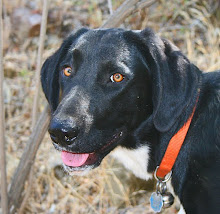
Every now and then I used to dog-sit for our good neighbors who own Fred's mom, Roxie.

At the time I had just gotten my new GoPro Hero2 with the various mounts and waterproof case, and "the walkie" seemed a good opportunity to start using the equipment.

Here you get some glimpses of three slightly deranged creatures enjoying each others company in the heat of the summer.

Wednesday, January 8, 2014

A Hollow Log


I've been scoping out the woods for hollow logs, meaning potential den sites, and the "jonah log" was an irresistible camera trap location.

I wasn't optimistic, because even the light from an infrared LED could dissuade an napper.

On the other hand, Craig and I had a gray fox take a high noon siesta in a cave where the white flash pulsed continuously, and it wasn't bothered in the least.

As you will see (and yes, I expect you to read this BEFORE looking at the video) no one took a nap.

But even so, there was a interesting selection of visitors.