About Me

My photo
Native Californian, biologist, wildlife conservation consultant, retired Smithsonian scientist, father of two daughters, grandfather of four. INTJ. Believes nature is infinitely more interesting than shopping malls. Born 100 years too late.
Showing posts with label Irrawaddy squirrel. Show all posts

Tuesday, February 8, 2011

The Winning Team

Female hoolock gibbon,  Hoolock hoolock

Team 2 learned their lessons well.

When I talk about camera trap sets I show various examples: trail sets, water sets, log sets, burrow sets, cavity sets, carcass sets, etc.

And windfall sets -- that is, resource concentrations like beehives, fish and amphibians in evaporating waterholes, salt licks, and fruiting trees.

While the other teams trudged off to set their cameras at water holes, game trails, and fallen logs, team 2 sought a fruiting strangler fig.

They found one on a ridge, aimed the camera at the trunk, and waited for the fig-eaters to climb up the trunk.

Maung Myat Soe does the walk test at Team 2's fig tree set.

They soon figured out that the fig-eaters weren't climbing the tree trunk.

They were arriving by an aerial or twiggy route, so the team moved their camera up into an adjacent tree to get a view of the canopy.

The result was 700+ exposures -- mostly false exposures of moving branches.

But the tedious task of viewing all those photos was worth the trouble.

The camera had caught 9 photos of a lady hoolock dangle-dining on figs in the morning sun.


They also got 32 pictures of great hornbills,


and 4 of an Irrawaddy squirrel.


The three members of team 2 were quite pleased.

They were was the only team to photograph these 3 species.

Monday, February 7, 2011

The class shows their pictures

Reviewing last night's camera trap catch with the class

The purpose of the 6 camera trapping teams was to incite a little healthy competition.

Lectures are fine, but once you've heard it, the best way to learn is to go out and do it.

When the teams returned from the field with their SD cards they were eager to see if there were any animal pictures.

No matter how bad the photo, they were thrilled to see it.

Thandar Kyi kept score by tabulating the results in a spreadsheet, and at the end of 6 days we had camera trapped tree shrews, an unidentified shrew, jungle rats, muntjac, hoolock gibbon, great hornbill, Irrawaddy squirrel, and two species of civets -- the toddy cat and probably the Large Indian civet.

A muntjac was photographed the first night.

Red  muntjac, Muntiacus muntjac 

 The tree shrews showed up when we started to scent lure (castoreum) and baits, like bananas.


Northern tree shrew, Tupaia berlangeri

The toddy cat or common palm civet was photographed on trails and at baits.

Common palm civet,  Paradoxurus hermaphroditus visits a log set baited with chicken viscera.

A large Indian civet trotted quickly past one camera, but its underexposed image was good enough to identify it.

Large Indian civet, Viverra zibetha

I encouraged the class to use of bait, and we got a decent number of rat photos too -- all of a long-tailed species known locally as atee-phyu--chewet -- or white-tailed rat.


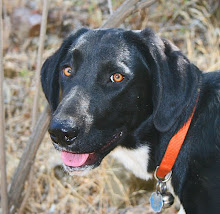
We also had a Chin forager pass through with his dogs. He didn't see the camera, but his dog smelled the bait at the log set.


 Stay tuned. In a day or two you'll see photos taken by the winning team.