About Me

My photo
Native Californian, biologist, wildlife conservation consultant, retired Smithsonian scientist, father of two daughters, grandfather of four. INTJ. Believes nature is infinitely more interesting than shopping malls. Born 100 years too late.
Showing posts with label Indonesia. Show all posts

Sunday, February 22, 2009

The not-so-giant Sulawesi civet--Part 2

[Macrogalidia approaches the camera trap]

"Macro" eventually made an appearance, and was even curious about the camera, but we didn't have the satisfaction of knowing this until we were back in the states and had the film developed. 

However, our spirits were buoyed whenever we checked the camera's film counter. Sometimes a 36-exposure roll was exposed in a couple days. 

What we eventually learned was that most of those exposures were made by night flying moths and falling leaves. They had all passed through the 6-foot pencil-thick beam of light between the sensor and reflector.  (See this post for camera details.)


[the camera trap: Nikon FE and flash housed in a wooden case 
and wired to an external photoelectric trigger.] 

We baited the site with a live chicken, tethered above but just beyond the sensor's beam. 

[Ken Lang and CW preparing the site, photo by Larry Collins]

We hauled 20 lbs of river sand and spread it on the trail so we could see tracks. The final incentive was a ripe banana hung on the tree in the background.   

It was a time consuming process, and checking the cam required a 1000 ft climb from Watling's hut on the Mewe River to the game trail on the ridge. 

[CW testing the photoelectric beam alignment]

The civet came and fetched the banana. 


Then it killed and ate the chicken.


In 1999 or so, a film maker from New Zealand wrote to me and proposed a documentary on Macro.

It was a splendid offer to revisit Sulawesi and take part in the story, but I was overcommitted and very much involved in a project in Burma. I told him that Jack West, who lived nearby in Australia, spoke Bahasa Indonesia, and had been very much involved-- was his man.

Jack spent 5 months in the field, and it took 18 months to trap another Macro, but now it is a matter of record. Jack got excellent footage of the civet moving about in an enclosure, and it is all in the film.

Thursday, February 19, 2009

The not-so-giant civet of Sulawesi--Part 1


Hauling a large live trap across the River Mewe, Sulawesi


Before I post camera trap photos of the animal, I'm giving you the background.

The Giant Civet of Sulawesi (Macrogalidia musschenbroekii) wasn't a giant at all, but we didn't know that in the mid-1970s.

To us it was a big civet from a big island with an exotic colonial name, the Celebes , located west of Wallace's Line, the sacred beat of Alfred Russell.

At the time it was known from only 11 moth-eaten and misshapen specimens with incomplete data.

That was enough to get us jazzed. We scoured the literature, but learned little more.

When we discovered that mammalogist Guy Musser of the American Museum of Natural History had logged a couple years in Sulawesi's outposts, we paid him a visit.

Musser's schtick was rats, but he knew of Macrogalidia, and took us to a cabinet down a dark hall.

The Sherman live trap is a well-known tool of the mammalogist's trade, but the one he showed us looked more like a beer can from a shooting range. 

The civet had terrorized and then eaten the live-trapped rodents on his trap line. The canine-riddled trap was a memento.

All of this was a compelling incentive to do our institutional duty: to hunt down "Macro" and "increase and diffuse knowledge".

My colleague at the National Zoo, Larry Collins, and I wrote a proposal to fund a study, and in due course we received a modest grant. It was enough to cover international and domestic travel in Indonesia, and bare necessities such as food in the field.


[Larry Collins, National Zoo mammal curator in the 70s.]

Fortunately, the National Zoo's Director, Theodore Reed recently had met the Director of the Jakarta Zoo, Benjamin Galstaun.


[Dr. Theodore H. Reed, Director of the National Zoo in the 70s]

Reed was a sole surviving son of a military family. Galstaun had been a POW of the Japanese. They had struck it off well, and Galstaun embraced the project. He offered us gratis room and board at the zoo, and travel expenses for the participation of his own staff.

Benjamin Galstaun was an unforgettable grandfatherly kind of character who shatters Yankee notions that worldly people live only in the west. 


A small bespectacled man of Armenian and Javanese parentage, he was an autodidact and an artist, fluent in 5 languages. The Kebun Binatang Ragunan, or Jakarta Zoo, was his creation, a shady green place tucked into a corner of Jakarta's sweltering sprawl.

"You can't starve here", he would say. "The fruit just falls on your head. The staff can have all they can eat." That was his paternalistic side.

Because the zoo was a success he was envied and dogged by seamy elements that harbored entrepreneurial dreams.

Why they tried was a mystery. Galstaun was an egalitarian, stubborn as a mule, and given to droll political commentaries. The zoo was invaded every morning by a battalion of widows, whom Galstaun employed as sweepers and groundskeepers. He would support the down-and-out and send his staff to collect civets, but he wouldn't lift a finger for a politico.  

He assigned his talented General Curator, Jack West as our liaison. 


[Jakarta Zoo General Curator Jack West, our liaison]


The first two trips in '78 and '79 were month-long recces.

After a week in Jakarta's traffic to get permits, Jack and I flew to Menado and then Palu, bought wire mesh, made live traps, and then bussed to some outpost where we lived with local families.

There we explored, read animal sign, collected scat, and surveyed local hunters. We recovered bones and skull fragments in kitchen middens, but caught only local Malay civets (Viverra tangalunga).


[A tranquillized Malay civet.]

In 1980, Collins, animal keeper Ken Lang, and I embarked on a 2-month expedition.

This time our field base was Dick Watling's jungle digs near Lore Lindu National Park.


[Dick Watling, then working on a management plan for Lore Lindu National Park for WWF]

We spent our time running the ridges, checking the live traps, and camera trapping. 

We caught our civet, and took it back to Jakarta. This time Galstaun met us at the airport.

I wrote in my notes, "On our ride to the zoo Galstaun told us he was no longer director of the zoo, that he was responsible for familiarizing the new director - an army general with a veterinary degree - with the zoo's operation, and that he would be retained for one year as a consultant. . ."

Several months later Jack West sent a telegram that the civet had died of distemper. That was the end of our dream to study the reproductive biology of Macrogalidia at the National Zoo. We published the data we had collected.

On a positive note, with the remaining funds from our grant Jack faithfully guided and financed a graduate student to study the civet's ecology, and a couple years later he finished his dissertation.

Postscript: Ten years later I was again in Jakarta and visited Galstaun's widow who had been allowed to remain living in the director's house.  After an hour of reminiscence she asked if I would care to have any book from her husband's library as a remembrance. I picked Hoogerwerf's "Udjung Kulon, Land of the Last Javan Rhinoceros", and she signed it over to me with a kind note.


Publications from our work in Indonesia

Wemmer, C. 1991. Lessons from a Javanese garden. ZooGoer, 20(1):10-14 

Wemmer, C. and Watling, D.  1982. Eye color polymorphism in the babirusa pig. Malayan Nature Journal , 36:135-136 

Wemmer, C. and West, J. 1982. The dermal shield of the lesser mouse deer, Tragulus javanicus. Malayan Nature Journal, 36:137-139

Wemmer, C., West, J., Watling, D., Collins, L., and Lang, K. 1983. The external characters of the Celebes palm civet, Macrogalidia musschenbrocki.  Journal of Mammalogy, 64:133-136

Wemmer, C. and Watling, D.1986. Ecology and status of the Sulawesi palm civet, Macrogalidia musschenbroeki (Schlegel). Biological Conservation, 35:1-17.
Tuesday, September 25, 2007

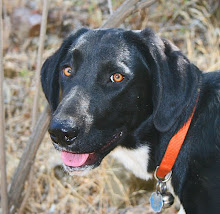
A ratcatcher's hound


A couple weeks ago, Patrick Burns of Terrierman's Daily Dose kindly mentioned Camera Trap Codger. I want to return the favor, Pat, so here's an experience with rat hounds.

This was back in 1979 when I was searching for the little known "giant civet" or musang choklat of Sulawesi (Macrogalidia musschenbroekii). We were living with a farmer's family in a village named Liberia. It was a transmigrated community of Javanese, and being the best rice paddy engineers in the world, they had completely terraced the slopes leading to the far ridges of forest and Gunung Ambang where the mysterious musang lived. I know this sounds like J. Peterman on the Seinfeld re-runs, but it's true.

My "musang brothers" were Jack West, the young multilingual general curator of the Ragunan Zoo in Jakarta, and a perpetually smiling bumpkin named Ribowo, who was the local warden. Though several years my junior, Jack took his charge as my protector very seriously. Ribowo was our native guide, known affectionately to the locals.

It didn't take long for the word to get out that we were trapping rats, which really doesn't raise any eyebrows in an Indonesian village, and we were told that the village had its own ratcatcher, with whom we would have a lot in common.

His name was Mengko; he farmed like everyone else, and he supplemented his income by moonlighting as a ratcatcher. Roasted rats were a delicacy in Liberia. [Note: Southeast Asia has climbing rats, giant rats, water rats, and predaceous rats, to mention just a few, and they are all referred to "tikus" (you can pronounce that teekoos). I was told by Guy Musser that Sulawesi is the epicenter of rat diversity.]

The next morning we met Mengko with a cigarette stuck to his lip. He wore a pointy little cap like the Pied Piper, and had a quiet air of confidence. In tow were his 14-year-old apprentice with a gunny sack, and his pale bridled rat hound, which looked like it didn't have the strength to catch a cockroach. Between the sorry looking dog and these guys wearing garish sport shirts, I was starting to have doubts.


"How in the hell is he going to get rats?" I stammered. "He doesn't have any equipment!"

Jack explained that the equipment -- a shovel blade, a steel rod, and a parang (=machete) --was in the gunny sack, and the dog would dig up the burrows.

Roiiiight!!! I thought with sarcastic British accent. I couldn't wait to see them use a shovel without a handle. And that listless dog that strained to crap every 50 yards? We'd be lucky if it didn't die in the next half hour.

The hunting ground, a few kilometers from the village was an overgrown coffee plantation that dated back to the Dutch. The rats burrowed among the roots.

Mengko located a promising burrow with the rod, fashioned a handle for the shovel with the parang, cleared the ground vegetation, and started digging. The pooch buried its head in the burrow, snorted deeply, then took a break to squat and strain. The scenario was repeated for an hour.

Suddenly there was a magical transformation. Maybe it was the smell of rat. Whatever it was, it breathed life into the dog. Like a bionic badger a stream of soil shot out between its hind legs, and in a minute it was almost out of sight.

Obviously, the poor creature expected a meal of rat guts, it's usual reward, but we wanted those rats alive. Mengko dragged it from the hole, and caught the rat by hand. Still, the dog worked for several hours, energized each time by the smell of frightened rat, until we had a fine collection.

Then it followed us back to the village on an empty stomach.